Explore CHI
Active Release Technique
Active Release Technique at CHI
Active Release Techniques, commonly called ART, is a hands-on approach to soft-tissue treatment that combines a practitioner’s contact with movement. Cohn Health Institute offers ART through Dr. Jon Gundlach. The technique focuses on tissues involved in movement, including muscles, tendons, ligaments, fascia, and nerves. An assessment comes first so the practitioner can consider whether this approach fits your concern.
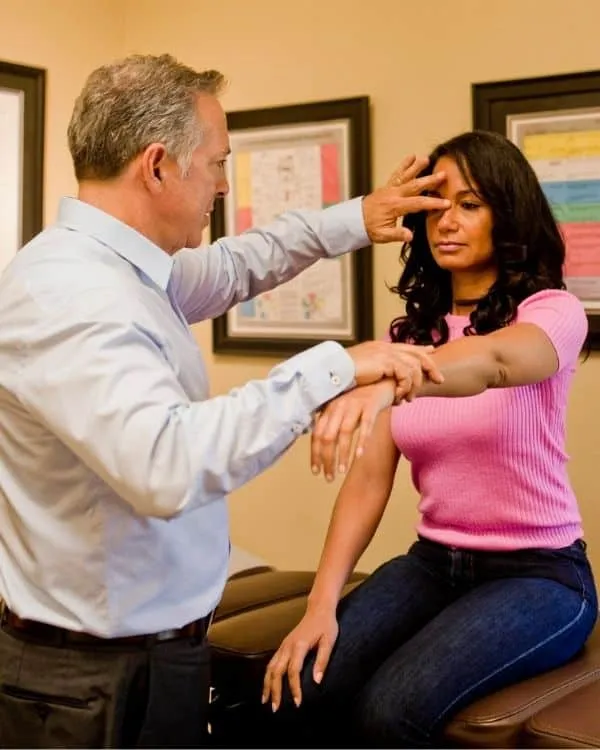
The movement is an important part of the technique. During treatment, a practitioner maintains contact with an area while the patient moves the affected structure. Hospital for Special Surgery explains that this allows the practitioner to feel tissue as it moves beneath the contact. For someone comparing services, that description is more useful than thinking of ART as a general massage appointment.
Why movement matters in an ART visit
A complaint often becomes clearer when you describe what you are doing when it occurs. Reaching into a cupboard, turning while driving, or returning to a familiar exercise gives a practitioner a concrete activity to discuss. You do not have to know which tissue is involved. Start with the movement you can describe, then explain where you notice discomfort or limitation.
ART’s official description includes assessing tissue texture, tension, and movement. These observations help guide where the practitioner works. The technique combines applied contact with patient movement; the exact area and movement depend on the assessment. Ask your practitioner to explain what they want you to do before a treatment movement begins.
Soft tissues and repeated activity
The Institute’s ART description discusses overuse and changes in soft tissues. It identifies acute injury and repeated small strains among the circumstances considered. Hospital for Special Surgery also describes the relationship between overuse, scar tissue, and restricted movement. These descriptions explain the focus of ART; they do not establish the cause of a particular person’s symptoms without an examination.
Consider the pattern of your own concern. Did it begin after one event, or did you notice it gradually? Does a specific task bring it on? Have you changed your activity because of it? These are useful details to share. Avoid deciding that a symptom must be scar tissue or a trapped nerve simply because you have read those terms in a description of the technique.
How tissue restrictions are described
The Institute explains the rationale for ART through three circumstances: an acute injury, the accumulation of small injuries from repeated activity, and inadequate oxygen reaching affected tissue. Its description connects these circumstances with the formation of scar tissue. In that model, tissue that should move freely becomes restricted. The treatment focuses on the interaction between the tissue and the movement that takes it through a range.
This is why an ART explanation includes more than the place where a person feels pain. A movement can involve several structures, and the practitioner uses contact and motion to assess the affected area. The Institute describes possible consequences of restrictions as reduced movement, weakness, and discomfort; it also mentions tingling or numbness when a nerve is involved. Those symptoms need assessment rather than an assumption that they all have the same cause.
The distinction between a tissue model and an individual diagnosis matters. Reading about scar tissue does not establish that scar tissue explains your symptoms. It explains what the technique is designed to address and why its combination of contact and movement differs from simply resting a hand on the painful area.
What research has measured
A 2015 study randomly assigned 24 people with chronic neck pain to ART, joint mobilization, or a control group. Researchers measured pain, pressure sensitivity, and neck movement. Both treatment groups improved on pain and range-of-motion measures. The comparison between ART and joint mobilization did not show a statistically significant difference. This small study supports further investigation of ART for that particular setting; it does not establish a permanent result for every condition.
A 2023 study followed 45 adults with neck pain lasting more than 12 weeks. All participants received massage. One group also received ART, another received strain-counterstrain treatment, and the control group received massage alone. After four weeks, the ART group had the largest changes in reported pain and neck disability; the strain-counterstrain group had the largest change in pressure pain threshold.
The second study is a comparison of combined treatments. It cannot tell us that ART alone would produce the same findings, or that the same results apply to a different body region. Together, the studies illustrate what researchers can measure: pain ratings, motion, and the effect on activities. Those are more specific outcomes than a general claim that a technique fixes every soft-tissue problem.
Dr. Jon Gundlach at Cohn Health Institute
Dr. Jon’s practice includes Active Release Technique alongside other approaches to physical function and movement. His patient population includes people with different activity levels, from daily-life concerns to athletic goals. His practitioner page provides his biography and areas of practice, including ART and ARPneuro.
Those services have different methods. ART uses hands-on contact and movement; selecting it does not automatically mean that another listed service will be part of your appointment. Ask Dr. Jon how his recommendation relates to your specific concern and whether the examination points toward ART, another approach, or further evaluation.
Your ART consultation
Bring a clear example of the activity that bothers you and relevant information about previous care. Ask Dr. Jon which findings support the recommendation and how progress would be assessed. Mention discomfort during any treatment movement so he can respond to what you are experiencing.
For related approaches, see the chiropractic and kinesiology department. To arrange a consultation, contact the office and mention Active Release Technique.
Related services